Biggest Midea U Smart Air Conditioner Buying Mistakes (And How to Avoid Them)
The Midea U Smart Air Conditioner represents one of the most significant design departures in the history of residential window cooling. By splitting the unit into two distinct sections connected by a narrow chassis "bridge," it allows a window to close almost completely through the center of the device. This innovation addresses the three primary complaints associated with window units: noise, the inability to open the window, and security risks. However, despite its popularity and critical acclaim, many consumers find themselves frustrated after purchase due to a handful of specific, preventable errors during the selection and installation process.
Understanding the nuances of the Midea U-shaped design is essential for any homeowner looking to upgrade their summer comfort. While it is marketed as a "universal" fit for standard hung windows, the reality of residential architecture is often more complex. From assessing cooling capacity (BTUs) to navigating the requirements of the specialized support bracket, avoiding common pitfalls ensures that this high-tech investment delivers on its promise of library-quiet operation and energy efficiency.
Detailed Product Analysis: The Midea U Innovation
To understand why buying mistakes happen, one must first analyze the engineering that sets the Midea U apart from traditional box-style window units. The "U" design is not merely aesthetic; it is a functional isolation strategy. In a standard air conditioner, the compressor—the loudest component—sits directly inside the room’s thermal envelope, separated only by thin plastic and insulation. The Midea U places the compressor on the exterior side of the window glass. When the window is lowered into the "U" slot, the glass serves as a sound barrier, resulting in noise levels as low as 42 decibels, which is roughly equivalent to a quiet library or a gentle rainfall.
Furthermore, this unit utilizes DC Inverter technology. Unlike traditional compressors that operate on an all-or-nothing (on/off) cycle, an inverter compressor adjusts its speed dynamically to maintain a consistent temperature. This leads to significantly lower energy consumption and eliminates the jarring "thump" often heard when a standard AC kicks on in the middle of the night. Despite these advantages, the physical configuration of the unit introduces specific constraints that buyers often overlook.
The Core Buying Blunder: Miscalculating Cooling Capacity
Perhaps the most frequent mistake made when purchasing any air conditioner, including the Midea U, is choosing the wrong BTU (British Thermal Unit) rating. The Midea U typically comes in 8,000, 10,000, and 12,000 BTU variants. Many buyers assume that "bigger is better," opted for the 12,000 BTU model for a small bedroom. This is a critical error. An oversized AC will cool the room so quickly that it fails to run long enough to remove humidity. This results in a "clammy" environment where the air is cold but the air feels damp.
Conversely, underestimating the heat load of a room is equally problematic. A room with high ceilings, large south-facing windows, or one that is adjacent to a kitchen requires more cooling power than the square footage alone would suggest. Buyers often fail to account for these environmental variables, leading to a unit that runs constantly at high speed, negating the energy-saving benefits of the inverter technology.
Common Pitfalls in the Selection Process
Beyond cooling capacity, several architectural and lifestyle factors frequently lead to post-purchase regret. These mistakes often stem from a lack of familiarity with the unique physical requirements of the U-shaped chassis.
Find top-rated Electronics products at great prices.
See Deals →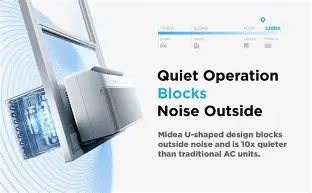
- Ignoring Window Sill Width and Depth: The Midea U includes a specialized quick-snap bracket that bears the weight of the unit. Some older homes with extra-thick stone sills or very narrow aluminum sills may not accommodate the bracket feet properly. Checking the minimum and maximum sill dimensions in the installation manual before purchase is vital.
- Overlooking Window Frame Obstructions: Because the window sash must descend into the "U" gap, any hardware on the window frame—index locks, high-profile handles, or deep screen tracks—can prevent the window from seating correctly. This leaves a gap that compromises the unit's efficiency and soundproofing.
- Assuming Compatibility with All Window Types: The Midea U is designed strictly for single-hung or double-hung windows. Buyers often purchase these units for sliding windows (left-to-right) or casement windows (crank-out), only to realize upon unboxing that the unit cannot be installed safely or effectively in those configurations.
- Underestimating Installation Complexity: While Midea advertises a "3-step" installation, the reality for a novice can be more daunting. The bracket must be perfectly level or tilted slightly outward to ensure proper drainage. A common mistake is skipping the use of a level, leading to water dripping into the interior wall or onto the floor.
- Wi-Fi and Smart Home Fragmentation: The Midea U relies on the MSmartHome app (formerly NetHome Plus). Some users purchase the unit expecting seamless integration with every niche smart home ecosystem, only to find that while it works well with Alexa and Google Home, it may require workarounds for platforms like Home Assistant or Apple HomeKit (without a Matter-compatible bridge in older models).
Pros and Cons of the Midea U Smart Air Conditioner
To provide a balanced view for potential buyers, it is helpful to categorize the strengths and weaknesses discovered through long-term residential use. While the pros largely outweigh the cons for most users, certain trade-offs are inherent to the design.
Pros
- Whisper-Quiet Performance: The separation of the compressor and the room by the window pane allows for a significantly quieter experience than any traditional window AC on the market.
- Energy Efficiency: As an Energy Star Most Efficient 2024 certified product, the inverter technology can save upwards of 35% on cooling costs compared to non-inverter units.
- Window Functionality: Users can still open the window to let in fresh air while the unit is installed, a feat that is impossible with standard window ACs without removing the entire unit.
- Enhanced Security: The design allows the window to be locked in a closed position around the unit, and the bracket system includes anti-theft mechanisms that make it difficult for an intruder to push the unit in from the outside.
- Superior Air Distribution: The blower design and adjustable louvers provide a powerful "long-range" air throw that circulates cooling more effectively across a room than smaller, flat-faced units.
Cons
- Weighted Component Balance: The bulk of the unit's weight is in the outdoor portion. This can make the initial placement on the bracket tricky for a single person, risking a drop if not handled carefully.
- Side Foam Panels: To seal the gaps on the sides of the "U," the unit uses foam insulation. Some users find these aesthetically unappealing or difficult to cut to a perfect fit, which can lead to minor air leaks if not sealed with additional weatherstripping.
- Drainage Logic: The unit is designed to use "slinger" technology, where the fan picks up condensate water and throws it against the condenser coils to help cool them. In extremely humid environments, this can create a splashing sound that some light sleepers find annoying.
- App Connectivity Hurdles: Initial pairing with 5GHz Wi-Fi networks can be frustrating, as the unit primarily communicates on the 2.4GHz band. Many buyers fail to temporarily split their network bands during setup, leading to "device not found" errors.
Technical Comparison: BTU Capacity vs. Room Size
The following table provides a guideline for matching the specific Midea U model to your space. Buying the exact capacity needed—rather than overbuying—is the most effective way to ensure comfort and humidity control.
| Model Capacity | Recommended Square Footage | Common Room Applications | Power Requirements |
|---|---|---|---|
| 8,000 BTU | Up to 350 sq. ft. | Standard Bedrooms, Small Offices | 115V / 15A Circuit |
| 10,000 BTU | Up to 450 sq. ft. | Master Suites, Large Bedrooms | 115V / 15A Circuit |
| 12,000 BTU | Up to 550 sq. ft. | Living Rooms, Studio Apartments | 115V / 15A Circuit |
Note: If the room is heavily shaded, reduce capacity by 10%. If the room is very sunny, increase capacity by 10%. If the unit is used in a kitchen, increase capacity by an additional 4,000 BTUs to account for cooking heat.
Comprehensive Buying Guide: How to Buy It Right the First Time
A successful purchase starts long before you reach the checkout. By following a structu…Step 1: Precise Window Measurements
Measure the width of your window opening. The Midea U requires a minimum width of 22 inches and can expand to fit up to 36 inches. Crucially, measure the height of the bottom sash when fully opened. You need at least 13.75 inches of vertical clearance. Do not guess these numbers; use a metal measuring tape for accuracy. Also, inspect the "stool" (the interior shelf of the window) to ensure it can support the pressure of the bracket's interior legs.
Step 2: Electrical Circuit Check
While all Midea U units run on standard 115V household power, they are sensitive to voltage drops. A common buying mistake is planning to plug the unit into an overloaded circuit shared with a vacuum cleaner or a high-end gaming PC. Ensure the outlet you intend to use is grounded and preferably not shared with other high-draw appliances. Avoid using extension cords, as they can cause the inverter to malfunction or create a fire hazard.
Step 3: Evaluating Smart Home Needs
If you intended to use the "Smart" features, verify your router location. Window units are often shielded by thick exterior walls, which can weaken Wi-Fi signals. If your window is far from your router, consider buying a Wi-Fi range extender. Without a solid connection, you will lose the ability to schedule cooling or turn the unit on remotely while commuting—two of the primary reasons people choose this specific model.
Find top-rated Electronics products at great prices.
View Offers →Step 4: Considering the "Window View" factor
Because of its unique shape, the Midea U sits lower in the window than a traditional AC. Consider what is outside that window. If you have a beautiful garden view at waist height, the unit will obscure a significant portion of it. Conversely, if you are on a ground floor facing a busy street, the ability to lock the window sash through the "U" offers a significant security upgrade over traditional units that can be easily pushed in from the sidewalk.
Installation Mistakes That Feel Like Buying Mistakes
Often, a user will think they bought a "dud" when the issue is actually rooted in the installation. One frequent complaint is that the unit is "vibrating the wall." This usually happens when the support bracket is not firmly anchored or when the unit’s weight isn't distributed according to the instructions. The Midea U relies on rubber dampeners included in the box; discarding these or failing to seat the unit's "groove" onto the bracket rail will result in unwanted resonance.
Another common error is the "tucking" of the side Curtains. The Midea U comes with foam blocks and adhesive strips. If these are cut too small, a "whistling" sound will occur when the wind blows, and insects may find their way inside. Taking the time to use a sharp utility knife for precise cuts is the difference between a professional-looking installation and one that leaks cooled air and invites pests.
Conclusion
The Midea U Smart Air Conditioner is a transformative piece of home technology that solves the age-old dilemma of noise and window accessibility. However, its sophisticated design demands a more thoughtful approach to purchasing than the "any-unit-will-do" mindset of the past. By accurately measuring your space, matching the BTU capacity to your specific environmental heat load, and verifying the architectural compatibility of your window frames, you can avoid the most common buyer pitfalls.
Investing in a Midea U means prioritizing energy efficiency and acoustic comfort. When buyers take the time to look past the marketing and focus on the technical requirements of the inverter system and the U-shaped chassis, they are rewarded with a cooling solution that is nearly invisible to the ears and gentle on the utility bill. Navigating the selection process with a clear understanding of these common mistakes ensures that your transition to smart cooling is as seamless and refreshing as the air the unit provides.