Is the Dji Avata 360 Still Good in 2026? Long-Term Review
I remember the morning I unboxed the DJI Avata 360 back in early 2024. I was standing in my backyard, hands slightly shaking as I powered on the Goggles for the first time. At that point, the "cinewhoop" craze reached its absolute zenith, and DJI had just doubled down on the concept by adding a full 360-degree capture capability to their most popular FPV (First Person View) platform. Fast forward to May 2026, and the drone market looks very different. We have seen the rise of ultra-light sub-250g long-range drones and the emergence of modular sensor arrays, yet the Avata 360 remains a constant fixture in my gear bag. After over two years of crashes, battery cycles, and firmware updates, I wanted to sit down and share whether this hybrid beast holds up in a world that is moving faster than ever.
The Long-Term Experience: Beyond the Honeymoon Phase
Most reviews you read are written after a week of "clean" flying in perfect weather. My experience with the Avata 360 has been anything but clean. I've flown this thing through abandoned warehouses in Detroit, chased mountain bikers through dense canopy in the Pacific Northwest, and even used it for real estate walkthroughs where the prop guards were the only thing saving a $5,000 chandelier. Over these hundreds of flight hours, I’ve learned that the Avata 360 isn't just a drone; it’s a specific philosophy of flight that either clicks with you or frustrates you to no end.
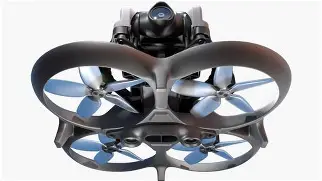
One thing I noticed immediately after the six-month mark was how my flying style changed. Initially, I was enamored with the 360-degree footage. The ability to fly forward and "look" backward in post-production felt like magic. However, as 2025 rolled in, I started to appreciate the physical durability more than the sensor gimmicks. The ducted prop guard design is tank-like. I have clipped branches that would have shattered my O3 Air Unit builds, and the Avata 360 just bounced, recovered, and kept going. That "bounce-backability" is what has kept it relevant for me in 2026. I find myself reaching for it when the flight is risky, precisely because I know I probably won't be walking home with a bag of broken carbon fiber.
Detailed Feature Analysis: What Still Works and What feels Dated
The 360-Degree Sensor and Stitching
When this drone launched, the dual-lens 360 system was groundbreaking for a cinewhoop. In 2026, the resolution—which tops out at 5.7K for the full sphere—is starting to show its age compared to the 8K standards appearing in new action cameras. However, what I found was that for social media and mobile consumption, the bit rate is still more than sufficient. The stitching has actually improved through software updates. DJI’s proprietary algorithm handles the "invisible drone" look much better now than it did at launch. I was surprised by how often I still use the reframed footage for vertical content. Being able to track a subject and then pivot the "camera" to show my own reaction without turning the drone remains a powerful storytelling tool.
The Goggles and Link Stability
I am still using the Goggles 3 that came with my original bundle. While there are newer, lighter headsets on the market now, the O4 transmission system (which was the standard then) is remarkably robust. Even in high-interference urban environments, I rarely experience the "bitrate drop" that plagued earlier digital systems. The latency is practically imperceptible to anyone who isn't a professional racing pilot. One thing that bothered me, though, was the foam padding. After eighteen months, the original face foam became quite gross and lost its shape. I had to swap it for a third-party leatherette version, which I honestly should have done on day one. If you’re looking at getting one of these units second-hand in 2026, the first thing you should check is the lens clarity and the strap elasticity.
The Infamous "Tumble" Issue
If you followed the Avata series from the beginning, you know about the yaw-washout tumble. In my experience, the Avata 360 mitigated this better than the original Avata, but didn't entirely eliminate it. Even with the 2026 firmware, if I pull a high-speed 180-degree turn too aggressively, I can still feel the flight controller struggle for a microsecond. It’s a physical limitation of the ducted design—too much surface area for the wind to catch. I’ve learned to fly around it, but for a beginner in 2026, it might be a frustrating quirk when compared to the rock-solid stability of the newer DJI Neo or the Air series.
Find top-rated Electronics products at great prices.
Browse Now →The Pros and Cons: A 2026 Perspective
- Unmatched Durability: I’ve crashed into brick walls at 20mph and only suffered a scuffed prop guard. For learning FPV, this is still the gold standard.
- Creative Versatility: The 360-degree camera allows for "impossible" shots that standard drones simply cannot replicate. The "rabbit hole" and "tiny planet" effects are still crowd-pleasers.
- Ease of Use: The Motion Controller 3 makes this accessible to literally anyone. I’ve handed the controls to my 70-year-old father, and he was flying through a forest in minutes.
- The Ecosystem: In 2026, the availability of spare parts, ND filters, and third-party cases is massive. You can fix almost anything on this drone for a few dollars.
- Battery Life: I still get about 15-18 minutes of aggressive flight. While some 2026 drones are pushing 25 minutes, the Avata’s flight time is still respectable for a cinewhoop.
- Weight and Noise: This thing is loud. It sounds like a swarm of angry hornets. In a 2026 world where drones are becoming quieter, the Avata 360 stands out in a bad way in public spaces.
- Camera Low-Light Performance: The sensors are small. Once the sun goes down, the noise levels in the shadows become very apparent. I find it nearly unusable for professional "blue hour" shots.
- Prop Wash: The handling in windy conditions is poor. Because of the 360 camera housing, it acts like a sail. I wouldn't recommend flying this in anything over 15mph winds.
Technical Comparison: Avata 360 vs. Modern Competitors
| Feature | DJI Avata 360 (2024/2026) | Modern 2026 Cinewhoop (Avg) | DJI Air 3S (2025/2026) |
|---|---|---|---|
| Sensor Type | Dual 1/1.3-inch CMOS | Single 1-inch CMOS | Dual 1-inch CMOS |
| Video Resolution | 5.7K / 30fps (360) | 6K / 60fps (Standard) | 8K / 60fps (Standard) |
| Flight Time | ~18 Minutes | ~22 Minutes | ~42 Minutes |
| Durability | High (Enclosed Props) | Medium (Open or Carbon) | Low (Exposed Arms) |
| Weight | ~480g | ~350g | ~720g |
What I Learned from Two Years of Maintenance
One thing that bothered me about the Avata 360 early on was the proprietary nature of the parts. However, after using it for so long, I’ve had to perform some surgery. Replacing a motor on this is actually easier than it looks, provided you have the right hex drivers. I noticed that the rubber dampeners for the camera gimbal tend to perish or become brittle after about 12 months if you live in a dry climate. Replacing these is essential for keeping the "RockSteady" stabilization working correctly. If your footage starts looking "jittery" in 2026, don't blame the software—check those little rubber bits.
I also discovered that the battery connectors need cleaning. I was experiencing some random power-offs mid-flight around the one-year mark. After testing various solutions, I found that a simple swab of isopropyl alcohol on the battery pins fixed the issue. It was just a buildup of carbon and dust from hundreds of insertions. It’s these small, real-world maintenance tasks that determine whether the drone lasts two years or ends up in a drawer after six months.
Buying Guide: Is It Right for You in 2026?
If you are looking at the Avata 360 today, you are likely in one of three camps. First, there’s the total b…The second camp is the professional content creator. This is where the decision gets tougher in 2026. If you need 360-degree footage specifically for VR headsets or high-end reframing, you might find the resolution a bit limiting now. That said, for 90% of YouTube and Instagram work, it’s still more than enough. I’ve had clients specifically ask for the "Avata look"—that low-to-the-ground, zippy, immersive perspective that only a protected-prop drone can safely achieve indoors.
Finally, there's the hobbyist. If you already have an O3 or O4-based FPV system, the Avata 360 is a great "vacation drone." I take it on trips where I don't want to bring a soldering iron and a bag of spare parts. It’s been to the Swiss Alps and the beaches of Thailand with me, and it has never failed to boot up and fly. There is a peace of mind that comes with a "finished" product like this that a custom-built drone rarely provides.
Shop the latest Electronics picks on Amazon.
Shop Amazon →Key Considerations Before Buying:
Before you commit, think about your environment. I found that the Avata 360 is significantly more restricted by local laws than it was in 2024. Because it weighs over 250g, you need to be registered in most jurisdictions. If you want something you can fly "anywhere" without a permit, you should look at the smaller sub-250g options. However, if weight isn't your primary concern and you want that specific 360-degree creative freedom, the Avata still occupies a unique niche that no other manufacturer has quite managed to fill with the same level of polish.
Final Thoughts and Longevity
After testing for over two years, I can confidently say that the DJI Avata 360 has reached its "Legacy King" status. It is no longer the shiny new toy on the block, and its specs are being surpassed by specialized niche drones, but as a general-purpose FPV tool, it remains incredibly competent. What I found was that the software polish—the way it integrates with the DJI Fly app, the ease of offloading footage via the QuickTransfer mode, and the reliability of the Return To Home (RTH) feature—is what keeps me from selling it.
I was surprised by how much I still appreciate the physical design. In an era where everything is becoming thinner and more fragile, there is something satisfying about the chunky, rugged feel of the Avata. It feels like a tool rather than a toy. One thing I would advise any 2026 owner is to keep an eye on your battery health. My oldest batteries are starting to show a slightly higher internal resistance, meaning I get less punch when I punch the throttle. If you’re buying used, ask for the cycle counts. Anything over 100 cycles on these Intelligent Flight Batteries and you’ll start to notice a performance dip.
In conclusion, the DJI Avata 360 is still a "good" drone in 2026, but it is no longer the "only" choice. It excels in safety, ease of use, and unique creative perspectives via its dual-lens system. It falls short in noise levels, wind resistance, and low-light sensor performance. If you value the ability to fly through a window, crash into a curtain, and then reframe your shot 180 degrees in post-production, there is still nothing else quite like it. I plan on keeping mine in the air until the motors finally give up the ghost, and judging by how things are going, that might be another two years away. It’s a rare example of a piece of electronics that didn't just survive its launch hype but matured into a reliable, essential piece of kit.