Partybox 1000 Specs, Features, and Value: Is it worth the price tag?
Category: Audio
Introduction
The JBL PartyBox 1000 occupies a distinct place in the market of large-format party speakers. Positioned as a flagship model in the PartyBox family, it promises club-level impact, an integrated light show, and live-performance features aimed at DJs, entertainers, and serious home-party hosts. This article breaks down what the PartyBox 1000 offers in practice: specifications and notable features, sound performance in real-world settings, practicality and portability, and whether the kit delivers value relative to its price. The goal is to give potential buyers the clear, usable information they need when deciding whether to invest in a high-end party speaker.
Detailed product review and analysis
Design and build quality
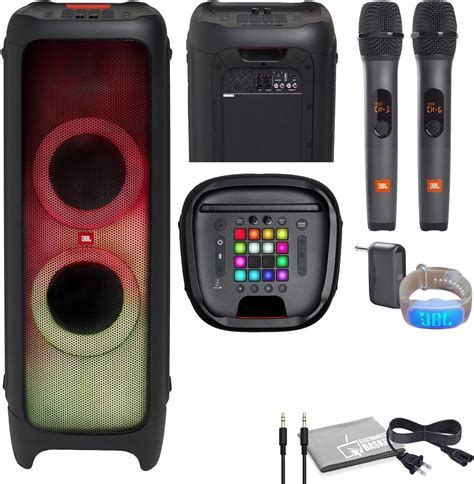
The PartyBox 1000 is unmistakably large and built to be showy. The cabinet uses durable molded plastic and metal grilles, and the unit sits on castor wheels with a pair of handles that make repositioning possible but not effortless. The overall aesthetic is aimed at spectacle: big drivers, visible LED light panels, and a prominent control surface that resembles a DJ pad. The build feels robust enough for frequent transport between homes or venues, but it is not intended to be lifted regularly by a single person.
Controls and user interface
A key selling point is the onboard control surface. The top panel combines standard volume/EQ controls with a dedicated "launchpad" area to trigger samples, loops, and lighting presets. Separate knobs for master volume, bass, treble, and mic/guitar levels let users dial in the sound quickly. For those who want minimal setup, Bluetooth streaming and USB audio playback are straightforward. For live performers, the mic/guitar inputs with dedicated level and effect controls offer low-friction operation.
Connectivity and inputs
The PartyBox 1000 supports a range of connections commonly needed for party and performance environments:
- Bluetooth wireless audio for phone/tablet streaming.
- USB playback for MP3s and similar files.
- Aux/line-level inputs (RCA/3.5mm) for external sources or DJ gear.
- Dedicated mic and instrument inputs with individual level controls and basic effects.
- Outputs for linking additional speakers or subwoofers in many setups.
In practice, this means the speaker can be used as a solo playback system, a simple DJ rig, or a PA-style frontline for karaoke and small live performances.
Sound performance
Sound is the PartyBox 1000’s core competency. It emphasizes low-frequency output and high SPL (sound pressure level) to cover large rooms and outdoor settings. The speaker’s voicing prioritizes punch and presence—kick drums and bassline elements are prominent, which benefits dance music, electronic pop, and live band playback.
In smaller indoor rooms the PartyBox can be overbearing unless levels are moderated and the bass is dialed back. In medium to large living rooms, backyards, and small venues it reproduces palpable low end without immediate distortion at moderate-to-high volumes, though extreme clipping occurs when pushed beyond recommended limits. Midrange projection for vocals is clear, particularly when using the onboard mic input designed for live use. Highs are present but not overly bright; the result is a warm, party-forward sound rather than audiophile neutrality.
Lighting and performance features
One of the PartyBox 1000’s strongest differentiators is its integrated light show. Multiple light zones, strobe-style effects, and customizable patterns are synchronized to the music. The aforementioned launchpad adds a performative element, allowing hosts or DJs to trigger samples and visual sequences on the fly. For people staging casual parties, holiday events, or small club nights, the lights turn the speaker into a self-contained entertainment centerpiece.
Portability and practical use
Portability is a mixed story. The unit includes wheels and handles, making in-vehicle transport and stage rolling feasible. However, it is heavy and bulky compared with smaller battery-powered party speakers; two people are often needed to move it safely over stairs or uneven ground. The PartyBox 1000 is mains-powered and does not have an internal battery, so it requires a power outlet — an important consideration for outdoor events where access to power is limited.
Shop the latest Audio & Headphones picks on Amazon.
Browse Now →Durability and maintenance
The speaker’s exterior survives typical party use well: the plastic shell resists dings better than thin metal, and the grille protects drivers from accidental contact. It does not advertise any IP water resistance rating, so users should avoid exposure to heavy rain or splashes near pools. Routine maintenance is minimal: keep the grille clear of obstructions, avoid prolonged clipping at maximum volume, and check cables and connectors before each event.
Real-world performance scenarios
Use case examples help clarify where the PartyBox 1000 excels and where it is less suitable:
- Backyard parties and block events: The 1000's loud, bass-forward output and built-in lights make it a one-box solution for gatherings where portability within a yard is manageable and mains power is available.
- Mobile DJs and small club nights: DJs who want a self-contained PA with visual flair can appreciate the launchpad and light show. For extended DJ sets or larger venues, it may be better paired with additional monitors or subs.
- Karaoke and live performances: The mic inputs and vocal presence make it a practical option for karaoke hosts and small acoustic acts, though seasoned performers may prefer a more neutral PA for critical vocal reproduction.
- Apartment listening or home hi-fi: The PartyBox 1000 is excessive for casual living-room listening and risks neighbor complaints. It is not a hi-fi speaker for nuanced critical listening.
Specs overview (what to expect)
Rather than an exhaustive electrical datasheet, this summary highlights the practical specifications buyers usually ask about:
- Power class: High-output, mains-powered party speaker designed for large rooms/outdoor gatherings.
- Connectivity:
Model Power / Intended scale Portability Best for Notable features PartyBox 1000 Top-tier output for large rooms and outdoor parties Wheels & handles, heavy, mains-powered Backyard events, mobile DJs, performance-centric parties Integrated light show, DJ launchpad, multiple live inputs PartyBox 710 High output for medium-to-large spaces Large but lighter than 1000; mains-powered Medium venues, outdoor gatherings, more portable than flagship Party lights, robust bass, portable footprint PartyBox 310 Moderate output for small-to-medium parties Battery-powered options, easier to carry On-the-go parties, small outdoor setups, casual users Built-in battery option (on some models), lighter, compact Buying guide: who should consider the PartyBox 1000?
When evaluating whether the PartyBox 1000 is the right purchase, consider the following buyer priorities and match them to the product’s strengths and limitations.
1. Event scale and volume requirements
If the buyer regularly hosts gatherings in large backyards, community spaces, or mobile DJ gigs where audience sizes exceed 50–100 people, the PartyBox 1000’s output and bass energy are well suited. For smaller, indoor-only parties, it is likely overpowered and could be a poor fit.
2. Need for integrated visuals and show control
Buyers who want an all-in-one showpiece—sound plus synced lighting and performance pads—will find strong value here. The integrated lights reduce the need to hire or transport separate lighting rigs for casual events.
3. Transport and setup practicalities
Consider the logistics of moving a heavy mains-powered speaker. If the buyer lacks a vehicle large enough to transport the unit or frequently needs to carry equipment up and down stairs alone, a lighter, battery-powered solution is preferable.
4. Acoustics and listening preferences
Those who prioritize audio accuracy for critical listening should opt for a different class of speakers. The PartyBox 1000 is tuned for impact—danceable low end and presence—rather than flat tonal balance.
Discover deals on Audio & Headphones — updated daily.
View Offers →5. Power access and outdoor use
Because the unit requires mains power and lacks an official water-resistant rating, buyers should ensure venue power availability and provide shelter from the elements when used outside.
6. Budget and longer-term value
High upfront cost can be offset by the unit’s versatility: it doubles as a speaker, lighting system, and performance controller. Evaluate how often those combined features will be used. For occasional hosts, cheaper alternatives may offer better cost-per-use.
Practical tips for buyers and operators
- Test the speaker in a space similar to where it will be used — sound behaves differently in small rooms versus open yards.
- Use the onboard EQ to tame excessive bass in smaller spaces to avoid distortion and neighbor complaints.
- Carry appropriate extension cords and power management gear; the unit draws significant current at high volumes.
- For DJs or performers, pre-program launchpad actions and lighting presets to reduce on-the-fly adjustments during an event.
- Pair the PartyBox with an additional monitor or subwoofer if the event demands more coverage or lower-frequency extension.
Value analysis: is it worth the price tag?
Value is subjective and depends on use patterns. For active entertainers, mobile DJs, and hosts who frequently stage large gatherings, the PartyBox 1000 represents strong value because it consolidates multiple systems into a single, show-ready package. The integration of sound, lights, and performance controls reduces setup time and equipment overhead.
Conversely, for users who need occasional background music, small indoor gatherings, or purely audio-focused systems, the price of the 1000 is harder to justify. In those cases, a smaller party speaker or dedicated PA paired with a compact lighting rig can deliver similar functionality at lower cost and with greater portability.
Durability and brand support also factor into value. JBL’s PartyBox line is broadly supported with service and accessories, which improves long-term ownership confidence compared with no-name alternatives. The unit retains resale value reasonably well in the event the buyer later upgrades or changes needs.
Conclusion
The PartyBox 1000 is a purpose-built, statement-level party speaker: loud, bass-forward, and visually engaging. It is best thought of as a one-box entertainment solution for hosts and performers who need high SPL, integrated lighting, and live-performance controls without assembling a separate PA, lights, and controller. Its limitations — weight, need for mains power, and party-focused tuning — make it less suitable as a general-purpose home speaker or for users who prioritize portability and neutral sound.
Ultimately, whether it is worth the price comes down to use case. For regular large-scale entertaining or mobile event work, the PartyBox 1000 delivers strong, tangible value. For occasional party hosts or listeners seeking refined audio fidelity, more cost-effective or specialized alternatives will likely represent better value.