Should You Buy the Ricoh Scansnap Ix2400 Document Scanner in 2026? A Deep Dive
I've been using the Ricoh ScanSnap iX2400 for several months now, both in a busy home office and for short bursts at a small client site, and in this article I want to walk you through my real-world experience. I bought this scanner to replace a stack of half-used scanning solutions and to finally digitize years of receipts, warranties, and miscellaneous paper that had accumulated. What I found was a capable, approachable sheet-fed scanner with thoughtful software, a few annoyances that matter in daily use, and a clear set of trade-offs depending on your needs.
Introduction: Why I picked the iX2400
I chose the iX2400 because I wanted a compact, fast single-pass duplex scanner that didn't require a lot of fiddling. My priorities were reliability when scanning mixed paper types (receipts, thick envelopes, double-sided forms), solid OCR so documents are searchable, and software that makes it easy to file scans into folders or cloud destinations without chasing multiple apps. After a few months of putting it through real tasks—batch-scanning tax documents, converting printed photo recipes, and scanning receipts while traveling—I feel ready to give a careful recommendation.
Unboxing and setup
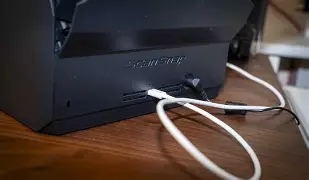
Out of the box the iX2400 felt compact compared with office-grade sheet feeders. Setup was straightforward: I unpacked it, connected power and USB (I also tested Wi‑Fi), installed the Ricoh/ScanSnap software on my Mac and a Windows laptop, and ran the quick warm-up and calibration steps. The guided software setup walked me through connecting to my home Wi‑Fi and configuring scan profiles.
In my experience the initial software installation is one of the most important parts—what you see on the first run determines whether you'll use the device easily or fight it. I appreciated that ScanSnap Home (the app the scanner integrates with) offered sensible defaults and a visual interface for creating profiles, although I did spend a few minutes customizing destinations and PDF options.
Daily use: speed, quality, and reliability
Once configured, I used the iX2400 for different workflows:
- Bulk scanning: stacks of office paperwork and tax records
- One-off scans: receipts and warranty cards while on the go
- Photo scanning: old printed photos and clippings
- OCR and searchable PDFs for my document archive
What I liked immediately was the "pick-and-go" feel. I could drop a mixed stack into the automatic document feeder (ADF) and the scanner handled different paper sizes and orientations without much intervention. The feeder's grip on different paper weights was generally solid, though I noticed occasional doubles when thin receipts were mixed with thicker papers. A quick fan of the stack or using the included separator sheet resolved most double-feed issues.
Scan quality for text was very good. OCR results were accurate for standard printed documents, and the searchability of the PDFs simplified my workflow—no more manually naming 30 invoices. When it came to photos, the scanner did a reasonable job for casual archiving, but if you're digitizing photo prints for preservation I found the color depth and sharpness adequate for reference copies, not museum-quality archival scans. Color correction in the software helped, but glossy photos sometimes showed a slight sheen or minor reflection artifacts depending on their condition.
Noise and speed matter when you use a scanner for an hour at a time. The iX2400 is not silent, but it's not disruptive either; it sits somewhere in the background like a small inkjet printer doing its thing. It warmed up quickly and handled continuous batches without overheating. I appreciated that the scanner didn't slow down visibly after a long run—throughput stayed consistent.
Software and ecosystem
The ScanSnap Home app (the experience is branded consistently with Ricoh's ScanSnap ecosystem) is the heart of the device. In my experience it provides:
Looking for the best Laptops & Computers deals on Amazon?
See Deals →- Profile management (scan-to-folder, PDF, image, searchable PDF)
- Basic image correction and cropping
- OCR processing and text extraction
- Integration with cloud services and network destinations
I liked having presets for frequent tasks: "Receipts" would compress and route to my expense folder; "Archive" would produce high-quality PDFs and run OCR. Where the software fell short was in advanced file management: tagging and automated filing rules could be stronger. I found myself exporting to a local folder and using a separate file-organizer script for the more complex workflows I rely on.
Compatibility was good across macOS and Windows during my testing. I used wireless scanning with both laptops without persistent connection problems, though large batches sometimes felt slightly faster over a wired USB connection. Mobile scanning via the companion app worked when I needed to start a profile remotely, which is handy if I'm prepping scans from a tablet while traveling.
Maintenance and long-term ownership
After several months of medium-volume scanning (a few thousand pages), maintenance boiled down to two things: keeping the rollers clean and occasionally replacing consumables. I appreciated that roller replacement kits are available and that cleaning the feed rollers is straightforward. The ADF path is accessible enough to clear jams; I had a couple of jams during my early weeks when I pushed an overstuffed envelope through, but the scanner handled the recovery process cleanly without risking damage to my documents.
One thing that bothered me was the periodic software prompts to update firmware and drivers. While updates are important, some updates required a restart of the…
What I appreciated
- Simplicity: The scanner does the basics extremely well—fast duplex scans, reliable OCR for printed text, and easy profile setup.
- Compact footprint: It fits on a small desk and stores neatly when not in use.
- Good paper handling: Mixed-size documents, envelopes, and small receipts generally feed without a problem.
- Consistent throughput: Performance stayed steady on long runs.
- Solid software integration: ScanSnap Home makes everyday tasks quick and predictable.
What disappointed me
- Receipt handling: Very thin, crinkled receipts sometimes cause double feeds unless separated first.
- Photo quality: Not a replacement for flatbed photo scanners if you need high-resolution archival scans.
- Advanced automation: The included software could be better at multi-condition auto-sorting and tagging.
- Occasional firmware interruption: Updates can interrupt long scanning sessions.
Pros & Cons
- Pros:
- Reliable duplex sheet-fed scanning
- Good OCR for printed documents
- Compact and reasonably quiet
- Intuitive ScanSnap Home software
- Easy maintenance and accessible consumables
- Cons:
- Struggles with very thin or damaged receipts without preparation
- Not designed for high-end photo archiving
- Software automation features could be more powerful
- Firmware updates can interrupt work sessions
Comparison: iX2400 vs two common alternatives
| Feature | Ricoh ScanSnap iX2400 (my unit) | Older ScanSnap models (e.g., iX1600) | Typical office alternative (Brother/Canon series) |
|---|---|---|---|
| Best for | Home office users and small businesses wanting simple, reliable scanning | Users who want a proven, older ScanSnap workflow at lower cost | Departments needing heavy-duty throughput and more advanced network features |
| Software experience | Intuitive ScanSnap Home; good presets, basic corrections | Similar software experience but sometimes fewer modern cloud hooks | Varying software; often more IT-centric with network management |
| Paper handling | Good for mixed batches; occasional doubles on fragile receipts | Comparable; older models can be just as reliable | Often designed to handle higher daily volumes and thicker documents |
| Photo quality | Acceptable for casual use, not archival | Comparable | Some have flatbed options for better photo scans |
| Price (relative) | Mid-range for consumer/prosumer scanners | Often found discounted used or refurbs | Varies; enterprise models typically cost more |
Buying guide: Should you buy the iX2400 in 2026?
If you're deciding whether to buy this scanner, here are the practical questions I asked myself—and how I recommend you approach them.
1. What volume do you scan?
In my experience, the iX2400 suits light-to-moderate daily volume: a few hundred pages a day, or a large occasional batch a couple of times a month. If you need continuous high-volume scanning (thousands of pages every day), consider a heavier-duty office model that offers service contracts and larger ADF capacities.
2. Do you need archival photo scans?
If your priority is preserving family photos or scanning artwork, the iX2400 can produce decent reference copies but it won't replace a flatbed or a dedicated photo scanner. For that use case, look for a scanner with a flatbed or higher-resolution sensors and better color handling.
3. How important is software automation?
The iX2400's software is friendly and fast for common tasks. If you need deep automation—automatic sorting by document type, advanced metadata extraction, or integration into complex document management systems—you may need additional software or scripts to supplement what comes in the box.
Shop the latest Laptops & Computers picks on Amazon.
See Deals →4. Platform compatibility and network needs
Make sure ScanSnap Home supports your OS version and that the scanner will fit into your network environment. I used both wired and wireless connections without major issues, but I found large batches slightly faster on USB. If you need centralized network scanning features for an entire team, check whether your preferred model supports that out of the box.
5. Consumables and support
Ask about roller replacement kits and support options before you buy. In my experience the cost of consumables was reasonable and the replacements are not difficult, but it's good to know what's available in your area and whether the vendor offers extended support.
Practical tips based on my use
- Pre-sort thin receipts and fragile pages—use a separator sheet or scan them in a small batch to avoid doubles.
- Create a few scan profiles for routines (receipts, invoices, photos) and name them clearly; it saves time.
- Run firmware updates between sessions, not mid-batch, to avoid interruptions.
- Keep a cleaning cloth and the roller-cleaning routine handy; a quick maintenance pass every few weeks keeps feed reliability high.
- Test both USB and Wi‑Fi modes to see which fits your workflow—USB for raw speed, Wi‑Fi for convenience.
Final thoughts and conclusion
After several months of regular use, my impression is straightforward: the Ricoh ScanSnap iX2400 is an excellent fit for people who want a low-fuss, efficient way to digitize paperwork and maintain a searchable document archive. In my experience it strikes a good balance between ease of use and performance—scan quality is reliable for text, OCR is very usable, and the software reduces friction in everyday tasks.
It isn't perfect. Thin receipts and very glossy photos reveal its limits, and the software could offer more advanced automation for power users. Still, for the majority of home-office tasks and small-business workflows I used it for, the iX2400 delivered consistent results and saved me a lot of time compared with my previous setup.
If you prioritize simplicity, dependable text scanning, and a compact device that won't dominate your desk, I can recommend it based on my hands-on experience. If you need archival-grade photo scans, enterprise-level automation, or relentless high-volume throughput, you should consider alternatives or supplement the iX2400 with additional tools.
In my experience, this scanner removes a lot of the annoyance from document digitization. It won't solve every use case, but for the things I needed it to do day-to-day, it made a meaningful difference.