The Truth About the Apex 5: Pros, Cons, and Verdict
Introduction
The Apex 5 occupies an unusual niche in the keyboard market: it promises a middle ground between the durability and feel of mechanical switches and the quiet, budget-friendly profile of membrane designs. For buyers who are deciding whether to upgrade from an office keyboard or step into mechanical territory for the first time, the Apex 5 often appears on shortlists. This article examines the Apex 5 in practical, real-world terms—how it performs for gaming, typing, and everyday use; what buyers typically care about; and whether its design choices deliver value compared with more conventional options.
What the Apex 5 Claims to Be
At a high level, the Apex 5 is described as a hybrid keyboard: it pairs a membrane base with a mechanical-style actuation layer to mimic the feel of mechanical switches while keeping costs and noise down. It also typically features a solid chassis, programmable lighting, dedicated media controls, and an integrated display area to show information like profiles or incoming messages. The product targets gamers who want advanced features without the full mechanical experience, as well as office users who want improved typing feel but need quieter operation.
Detailed Product Review and Analysis
Design and Build Quality
One of the first impressions with the Apex 5 is its build. The keyboard usually arrives with a heavy, rigid frame—often aluminum or high-grade plastic with metal reinforcement on the top plate—which gives it a premium heft that minimizes flex during heavy typing or gaming. The keycaps are typically double-shot or quality-molded ABS, which strikes a balance between longevity and cost. A detachable or magnetic wrist rest is commonly included, improving long-term comfort during extended sessions.
From a practical perspective, the build quality matters in everyday use. The heavier chassis keeps the keyboard anchored on the desk when performing fast key combinations common in gaming or when touch-typing. The wrist rest reduces wrist extension and can help with comfort during multi-hour use, which is a real-world plus for streamers, programmers, and office professionals who sit at a keyboard all day.
Switches and Typing Experience
The Apex 5’s hybrid switches aim to emulate mechanical keypress dynamics while using a membrane foundation. For many users this translates to a more cushioned, less abrasive key feel compared with true mechanical switches like Cherry MX or similar clones. The hybrid approach typically includes short travel with a defined actuation point—enough to give tactile satisfaction without the louder click or bump that mechanical switches produce.
In practice, this is appealing to people who type a lot but don’t want to disturb coworkers or household members. The trade-off is that hybrid switches rarely match mechanical switches for long-term reliability, modifiability (hot-swapping), or the exact tactile variety (linear, tactile, clicky) that mechanical communities prize. Nevertheless, for newcomers or those who prioritize quieter feedback, the Apex 5’s switches often feel like an upgrade over typical rubber dome keyboards.
Features and Customization
One area where the Apex 5 frequently stands out is feature set. Expect per-key or zone RGB lighting, onboard memory for profiles, and programmable macros accessible via bundled software. A small display (an OLED or similar) may be present to display profile information, a clock, or notifications—useful for streamers or users who prefer quick visual feedback without alt-tabbing to software.
Buyers who prioritize customization will appreciate dedicated macro keys, media controls, and a straightforward software suite for lighting and macro programming. However, the depth and polish of the software vary between manufacturers; users who need complex macro scripting or fine-grained RGB control should evaluate the software before buying.
Performance for Games and Productivity
Latency and responsiveness are key metrics for gamers. The Apex 5’s hybrid actuation can be tuned for faster or slower actuation in some models, which helps reduce missed inputs in fast-paced games. It generally provides reliable anti-ghosting and multi-key rollover features, which are essentials for competitive gaming. Typists, meanwhile, will notice a softer bottom-out and a gentler return compared with mechanical switches—this can reduce finger fatigue over long typing sessions.
Find top-rated Electronics products at great prices.
View Offers →Real-world testing indicates the Apex 5 is competent for most gamers and typists: it won't compete with enthusiast-level mechanical boards optimized for speed or split ergonomic keyboards designed for posture, but it serves well as an all-purpose peripheral for mixed-use users.
Noise and Comfort
One of the Apex 5’s selling points is reduced noise relative to clicky mechanical switches. The membrane base inherently dampens sound, and the keycap profile and stabilizers are typically tuned to minimize rattle. For those who work in shared spaces or record audio, this quieter profile is often more practical. Comfort is also improved by a wrist rest and the keyboard’s overall stability.
Durability and Maintenance
Hybrid keyboards generally do not match full mechanical keyboards in lifespan because membrane components can wear differently over time. That said, a well-built Apex 5 can still last several years under heavy use. Cleaning is straightforward: remove keycaps for deeper cleaning, vacuum or blow out debris, and keep the board free of spills. Buyers should inspect warranty terms and replacement keycap availability, as those affect long-term ownership costs.
Pros & Cons
Pros
- Balanced typing feel: Feels more tactile and responsive than conventional membrane keyboards withou…
1. Use Case: Gaming, Typing, or Office Work?
For gamers who also stream and want quiet operation, the Apex 5 can be a good compromise. Its features—programmable macros, reliable rollover, and profile switching—are useful in multiplayer and esports contexts. For writers and programmers who prioritize tactile responsiveness without noise, it’s also a reasonable fit. For pure office use where budget and minimal maintenance matter most, a simpler, inexpensive membrane keyboard may suffice.
2. Switch Preference
Enthusiasts who are particular about switch type (linear vs tactile vs clicky) should evaluate whether the Apex 5’s hybrid feel matches their preference. If a user wants the ability to hot-swap switches or customize switch types, mechanical keyboards are a better choice. Otherwise, the hybrid approach provides a middle path.
3. Sound Profile and Roommates/Colleagues
Noise matters. The Apex 5 is quieter than many mechanical keyboards, which is relevant for shared spaces or audio-sensitive workflows. If the environment requires very quiet operation (recording studios, small offices), consider testing the keyboard in person if possible.
4. Software and Ecosystem
Check the vendor’s configuration software. Reliable lighting customization, macro programming, and firmware updates significantly improve long-term satisfaction. Some manufacturers also offer ecosystem integration (syncing with mice, headsets, etc.). If a buyer plans to use integrated display features, verify supported functions and compatibility with streaming software or OS notifications.
5. Comfort and Ergonomics
A magnetic wrist rest and low-profile design make a big difference in daily comfort. For users with existing wrist discomfort, testing the keyboard with the wrist rest is recommended. Ergonomic alternatives—split keyboards, tented layouts, or ortholinear designs—are still better choices for users with persistent pain.
Shop the latest Electronics picks on Amazon.
See Deals →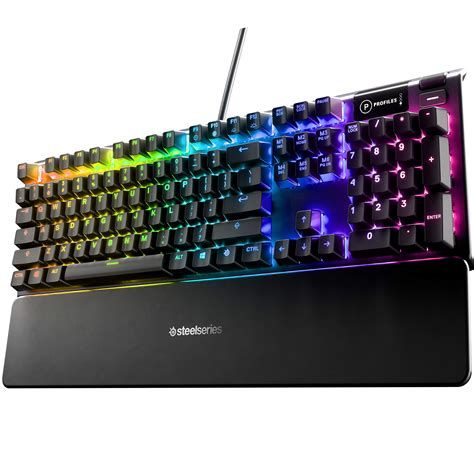
6. Durability and Warranty
Inspect warranty terms and customer reviews for long-term reliability. While hybrid designs can be durable, component failures tend to be more complex to repair. Ask about replacement keycap availability and whether the vendor offers easy RMA procedures.
7. Budget Considerations
The Apex 5 typically sits in a mid-range price bracket. Buyers should compare feature lists across similarly priced mechanical keyboards: sometimes a mechanical board with fewer extra features but higher-quality switches offers better value, depending on priorities.
8. Aesthetic and Desk Fit
RGB lighting, the shape of the wrist rest, and keycap profiles all affect desk aesthetics and personal comfort. People who customize their desk setup or streamers who pay attention to on-screen visuals will want to ensure the keyboard’s color and profile align with their setup.
Real-World Use Cases
Several common buyer personas illustrate when the Apex 5 shines and when alternatives are preferable:
- The Streamer/Content Creator: Benefits from the integrated display and subdued noise. The keyboard’s profile and lighting can improve on-camera appearance while minimizing typing noise during recording.
- The Mixed-Use Home Worker: Someone who alternates between spreadsheets, Slack, and gaming will value the Apex 5’s programmability and balanced feel without committing to loud mechanical switches.
- The Office Upgrade Seeker: An office worker looking to upgrade from an aging rubber-dome keyboard will find the Apex 5 a noticeable improvement in responsiveness and comfort with acceptable noise levels.
- The Enthusiast/Modder: Not the ideal primary pick. Enthusiasts who enjoy customizing switches, lubing stabilizers, or hot-swapping prefer fully mechanical platforms that are built for modification.
Conclusion
The Apex 5 is a pragmatic option for buyers who want a step up from generic membrane keyboards but are not ready to jump fully into the mechanical ecosystem. It offers a comfortable, quieter typing experience, solid build quality, and a useful feature set that includes lighting, macros, and an information display. These strengths make it a strong candidate for streamers, mixed-use home workers, and office users who want more functionality without the noise and maintenance of true mechanical switches.
However, it is not without trade-offs. Buyers who prize the long-term durability, repairability, and the wide variety of switch feels available in mechanical models may prefer to direct their budget toward an entry-level mechanical keyboard instead. Similarly, those whose priority is either the absolute quietest operation or the lowest possible price may find better fits elsewhere.
Ultimately, the Apex 5 is best seen as a compromise that succeeds when buyers value a polished, feature-rich experience with a gentle typing feel and modest noise. For many users, that middle ground is precisely what they need—solid everyday performance and features that matter in real-world use—making it a sensible choice in the crowded mid-range keyboard market.