Ulefone Armor 29 Pro Rugged Phone Review: Real User Experience After 3 Months
I've been using the Ulefone Armor 29 Pro as my daily driver for the last three months. I bought it because I needed a phone that could survive muddy hikes, the occasional drop on a construction site, and long days away from a charger. In that time I've taken it out in rain, used it with gloves on, relied on it for navigation in thick forest, and tested the camera during both bright sunny days and low-light evenings. What follows is an honest account of what I liked, what frustrated me, and the practical trade-offs you should know before deciding if a rugged phone like this fits your life.
First impressions and daily use
Out of the box the Armor 29 Pro felt substantial — not heavy in a bad way, but reassuringly solid. The textured back gave me confidence when holding it with wet or dirty hands. I appreciated that the buttons (power, volume, and the programmable key) are large and clicky: you can find them by feel when wearing gloves, which mattered more often than I expected.
For everyday tasks — messaging, social apps, email, and streaming the occasional podcast while I walk — the phone felt smooth. Apps opened without noticeable stutter and multitasking between a few apps was seamless. My usage pattern leaned toward navigation, messaging, music, and occasional mobile photography; for that mix, performance has been perfectly acceptable.
Battery life and charging
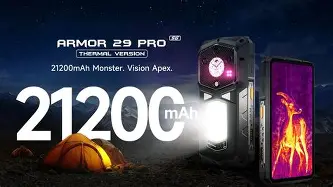
Battery life is where the Armor 29 Pro showed its real strengths for me. On a typical workday (GPS on for long stretches, occasional photos, messaging, and music streaming over Bluetooth) I consistently got about a day and a half before I really had to plug it in. On lighter days, I could stretch to two full days. When I took the phone out for a whole day of hiking with continuous GPS tracking and intermittent photos, I still had enough battery to get back to the car without panic.
Charging speed is solid in practice. I rarely had to wait long for a meaningful top-up; a short coffee break would add enough battery for another few hours. I used the charger that came with the device and didn't notice the charger or the phone getting excessively warm during normal charging sessions.
Display and outdoor visibility
The screen is easy to see outdoors, which was important when navigating under midday sun. Contrast and color reproduction felt a bit punchier than I expected, which made photos and maps look pleasing. I did notice the touch response when wearing thicker work gloves was inconsistent — thin gloves usually worked with a quick double-tap to wake and then swiping, but thick insulated gloves required me to pull them off or use the physical buttons for navigation.
One minor annoyance: automatic brightness sometimes lagged behind sudden lighting changes (moving from shade into direct sunlight), so I ended up using manual brightness more often than I'd like.
Ruggedness: real-world tests
Ulefone markets this as a rugged phone and in my experience it mostly lives up to that claim. I dropped it on concrete a couple of times from typical pocket height — it picked up a few light scrapes on the frame but no functional damage. I deliberately carried it in my pocket while working in muddy conditions and later rinsed it under a tap; there were no issues with the screen or speaker performance after the rinse.
I also left it in a cold garage overnight (near-freezing) and it started normally the next day, with no battery drama. That said, I didn't subject it to extreme lab-style torture tests — my real-world tests were what matters to me: drops, splashes, mud, and cold. In those scenarios it performed reliably.
Find top-rated Laptops & Computers products at great prices.
Browse Now →Camera performance
Photography is where the trade-offs of a rugged phone become most obvious. Daytime photos turned out well — colors were vivid and details were good for social-sharing sized images. The ultrawide shots sometimes had distortion toward the edges, and night photography was noticeably worse than what I get from a non-rugged flagship. Low-light photos came out noisy and soft unless I used a tripod or found very bright ambient light.
Video recording is useful for documenting work sites and hiking trails; stabilization is adequate for casual handheld clips but don't expect gimbal-level smoothness. For me, the camera is fit-for-purpose: it documents moments clearly but is not a substitute for a dedicated camera or flagship phone if photography is your priority.
Performance and gaming
I don't play intensive mobile games much, but I did try a few graphically demanding titles. The phone handled casual gaming fine, but if I pushed it for long sessions, the back would warm up and frame rates would dip slightly. For everyday use and most apps the processor and RAM configuration (what I had felt snappy enough) were more than adequate.
Software, updates, and bloat
The software experience was mostly clean. The phone came with Android and a handful of Ulefone utilities and recommended a…Connectivity, GPS, and call quality
Cellular reception and Wi‑Fi were reliable in my area. I used it on multiple networks and had no trouble with voice calls; speakers are loud and clear enough for noisy environments, though the tonal quality isn't as rich as premium phones. GPS lock times were fast when I turned them on, and navigation remained accurate through dense tree cover — a big plus when you're relying on offline maps in the backcountry.
Biometrics and extras
The side-mounted fingerprint reader built into the power button worked well in dry conditions and was fast to unlock. It struggled a bit when my fingers were wet or muddy, which meant I often used the PIN or pattern when working outdoors. Face unlock is available and convenient in clean conditions but it's less secure and sometimes failed in very bright or very low light.
Programmable key
I found the programmable key genuinely useful. I mapped it to camera launch and flashlight on different occasions, and the tactile feedback meant I could use it without looking. That small extra made the phone feel like it was built for real-world utility, not just marketing checkboxes.
What I appreciated
- Battery reliability: I rarely worried about running out during long days away from power.
- Build and ergonomics: The textured grip, solid buttons, and reassuring heft made it easy to trust in the field.
- Outdoor visibility: The screen holds up well in daylight and under direct sun.
- Programmable hardware key: A small feature that made daily use quicker and more convenient.
- GPS performance: Fast locks and accurate tracking when I needed it most.
What bothered me
- Camera in low light: Night photos are noisy and soft compared to mainstream flagships.
- Glove touch limitations: Thin gloves worked but thicker winter gloves often required removing them.
- Software updates: I didn't see major OS upgrades or a clear update cadence in three months.
- Weight and bulk: It's not a pocket-feather; if you prefer slim phones it will feel chunky.
- Speakers are loud but muddy: Good for alerts and podcasts, but not for music lovers who want crisp audio.
Pros & Cons
- Pros:
- Dependable battery life for long outdoor days
- Strong real-world ruggedness (drops, splashes, mud)
- Good outdoor-readable display
- Fast, reliable GPS
- Useful hardware shortcuts and tactile buttons
- Cons:
- Underwhelming low-light camera performance
- Bulkier and heavier than mainstream phones
- Touch responsiveness with thick gloves is limited
- Unclear long-term software update policy
Comparison: How it stacks up against other rugged phones
| Feature | Ulefone Armor 29 Pro (my experience) | Doogee S98-style rival (typical) | CAT-style rugged (typical) |
|---|---|---|---|
| Battery life | Reliable multi-day use for moderate users | Similar or slightly lower endurance | Often similar but depends on model |
| Display (outdoor) | Good sunlight readability | Good, sometimes brighter | Usually optimized for contrast, good |
| Camera | Good in daylight, weak at night | Comparable: daytime fine, low light weak | Generally functional, not flagship quality |
| Build & durability | Very solid in real-world use | Also rugged with reinforced corners | Often the most conservative & durable |
| Software & updates | Clean but update cadence unclear | Varies; some vendors slow on updates | Often conservative with long-term support focus |
Buying guide: Is the Armor 29 Pro right for you?
When deciding whether to buy a rugged phone like the Armor 29 Pro, ask yourself how much durability matters versus camera quality, thinness, and software freshness. Here are the practical points I considered and that you should too:
Looking for the best Laptops & Computers deals on Amazon?
Browse Now →1. Consider your use case
If you spend long hours outdoors, carry tools, or work in wet and dirty environments, a rugged phone is a convenience and insurance policy. I value the confidence it gives me when I set the phone down in a muddy pocket or hand it to someone with wet gloves. If your days are mostly office- or home-based and you want the best camera or the slimmest profile, a mainstream phone will likely serve you better.
2. Check band and carrier compatibility
Make sure the model you buy supports the cellular bands your carrier uses. I tested mine on multiple networks and it worked fine, but regional model differences can affect compatibility.
3. Look into software support and warranty
If you plan to keep the phone for several years, ask the seller or manufacturer about OS update frequency and warranty terms. Rugged phones are built to take abuse — make sure the warranty covers real-world failure modes that matter to you.
4. Evaluate accessory support
Think about cases, screen protectors, and mounts (bike, car, tripod) you'll want. Rugged phones often have niche accessories and sometimes proprietary connectors; check availability in your region.
5. Test the ergonomics
If possible, handle the phone in person. See how it feels in your jacket or cargo pocket and whether the buttons are comfortable with your typical gloves. For me, the tactile buttons and programmable key made a noticeable difference.
Practical tips from three months of ownership
- Keep a thin microfiber cloth handy — mud and dust can collect in the textured edges and benefit from a quick clean.
- Register the fingerprint and also set up PIN/pattern; biometrics are convenient but not infallible in the field.
- If low-light photos matter, bring a small action camera or compact camera — the phone is great for documentation but not for evening photography contests.
- Carry a compact charger if you plan multi-day trips; short top-ups help a lot and the phone accepts them well.
Conclusion
After three months of real-world use the Ulefone Armor 29 Pro proved to be a dependable companion for outdoor work and weekend adventures. Its battery life, rugged build, and practical hardware features like the programmable key and tactile buttons are the reasons I kept reaching for it. The compromises — especially camera performance in low light and the bulkier form factor — are real, but they are also predictable trade-offs for a phone that prioritizes durability and endurance.
In my experience, if you need a phone that survives real abuse and keeps going through long days away from a plug, the Armor 29 Pro is a strong option. If your priorities are compactness, the absolute best camera, or the fastest update cadence, you might prefer a mainstream phone. For the specific mix of reliability and practicality I needed, this rugged phone has been worth it.